C á ntaro Ancient Andean Ceramic Container

C á ntaro Ancient Andean Ceramic Container

It is a ceramic container unique to the ancient Andean region, commonly used to hold liquids. It holds significant social and ceremonial importance in Andean culture. The Intermedio Tardio period (approximately 1000-1470) showcased the characteristics of ceramic craftsmanship during this period, including exquisite craftsmanship and unique artistic styles. The ceramic craftsmanship during this period underwent significant technological and stylistic changes. It usually has a dual function of practicality and ceremony. Formally, it may be relatively simple, but in terms of decoration and production techniques, it is very complex, reflecting the needs and aesthetic trends of society at that time.
Ceramic containers from the Late Horizon period in Peru

Ceramic containers from the Late Horizon period in Peru

It is a ceramic container made during the late horizon period in Peru (approximately 1470 to 1532). Not only is it a practical container, but it is also a symbol of art and culture. It usually has a unique shape and decoration that reflects the aesthetic and religious beliefs of the society at that time. In 2022, a ceramic container voluntarily returned from France was received by the Association of Friends of Heritage. This voluntary return behavior reflects respect and protection for cultural heritage, and also demonstrates the international community's emphasis on the return of cultural relics and the protection of cultural property. It holds an important position in the pre Columbian culture of Peru, showcasing the ceramic making techniques of that time.
Duck shaped ceramic container

Duck shaped ceramic container

Ceramic containers with duck like features were very popular in ancient Peruvian culture, especially during the Mochica culture period. The Mochika culture existed approximately between the 1st century and 800 AD, and its artistic works are renowned for their intricate sculptures and paintings, reflecting the social life, religious beliefs, and agricultural activities of the time. During this period, ceramic art experienced significant development, resulting in many representative works. Not only as daily necessities, but also as works of art, showcasing the craftsmanship and aesthetic style of the time. This ceramic container returned from the United States in 2022.
Moche Culture Human Image Sculpture

Moche Culture Human Image Sculpture

Human image sculptures with Moche cultural characteristics, which existed between 200 BC and 600 AD. The Moche culture is an ancient civilization in the coastal region of northern Peru in South America, known for its exquisite metalworking, pottery, and sculpture. This sculpture is an important work of art in the Moche culture, showcasing the society's portrayal of character images and aesthetic concepts at that time. In 2021, this sculpture was returned from Canada. The return of the sculpture represents respect and protection for cultural heritage, and also reflects the international community's emphasis on illegal cultural relic trade and cultural heritage protection.
Late middle period humanoid ceramic bottle

Late middle period humanoid ceramic bottle

The humanoid ceramic vase from the late middle period (approximately 1000-1470 AD) is a historically significant artwork, with its origins dating back to ancient American civilization. This specific ceramic bottle was returned from the Dutch Republic and sold at an auction in Vendu Rotterdam in 2022. It is an important physical evidence for studying ancient culture, craftsmanship, and trade exchanges. During this period, pottery exhibited diversity in shape, decoration, and usage. Ceramic bottles, as representatives of that era, not only reflected the daily needs of people at that time, but also showcased their artistic aesthetics and cultural characteristics.
Human sculpture artwork

Human sculpture artwork

It is a type of humanoid sculpture artwork created between approximately 1000 and 1470. It usually has unique cultural characteristics and artistic styles, reflecting the social beliefs, religious rituals, and aesthetic concepts of the time. During this period, many civilizations made significant achievements in artistic creation, with sculpture art particularly developed. It was not only more mature in technology, but also more rich and delicate in artistic expression. Successfully recovered from the Netherlands in 2022. This is not only a protection of cultural heritage, but also a respect for history and culture.
Ancient snake shaped ceramic container

Ancient snake shaped ceramic container

Japanese cherry blossom chopsticks

Japanese cherry blossom chopsticks

It is a tableware that combines traditional Japanese aesthetics with modern design concepts. It is usually made of high-quality materials such as bamboo or wood, which are finely crafted to ensure comfort and embody the concept of environmental protection. The surface is often carved with cherry blossom patterns, which are not only beautiful but also symbolize the arrival of spring and the beginning of a new life. The design is simple and elegant, with smooth lines and comfortable grip, suitable for various occasions. The cherry blossom chopsticks are of moderate length and easy to pick up food. In addition, they are also a symbol of Japanese culture and are often given as gifts to family and friends to express good wishes.
Japanese antique lacquer box

Japanese antique lacquer box

It is a unique artwork with Asian style, usually used to store tea or other precious items. Known for its exquisite craftsmanship and unique cultural significance. It is usually made of high-quality wood and coated with multiple layers of paint on the surface. After careful polishing, it presents a smooth texture and deep colors. Decorations are usually very intricate and may include traditional patterns, landscape paintings, or calligraphy, reflecting the creator's superb skills and ultimate pursuit of details. Antique lacquer boxes are highly favored by collectors due to their historical value, artistic value, and scarcity. Not only a collection, but also a window to understand and appreciate traditional Asian art and crafts.
Decorative vase

Decorative vase

It is a ceramic or glass container mainly used for indoor beautification and decoration. This type of vase has exquisite design and diverse shapes, and can be a classic, modern, or any other style of artwork. Decorative vases typically have elegant necks and wide bottoms to support their weight and maintain stability. They can be monochrome or feature a variety of colorful patterns and decorations, such as hand drawn flowers, geometric shapes, or other abstract designs. Decorative vases not only add beauty to indoor environments, but also reflect the owner's taste and style. They can be displayed as art pieces alone or combined with natural elements such as flowers, dried flowers, and tree branches.
Spanish ceramic kettle

Spanish ceramic kettle

15th century medieval semi glazed clay wine pot - Hunter Museum in Limerick

15th century medieval semi glazed clay wine pot - Hunter Museum in Limerick

It is a precious ceramic artwork. It has a ribbon shaped handle, with glazed covers on the upper part, handle, and neck inside and outside. This work is currently housed in the Hunter Museum in Limerick. In the Middle Ages, it was a common daily item with a simple and practical design. The ribbon shaped handle is convenient for carrying and pouring wine, while the glazed surface on the neck may be used to protect the pottery from liquid erosion, while also increasing its aesthetic appeal. Although it has been a long time, this semi glazed wine pot is still well preserved, providing us with valuable information for studying medieval ceramic craftsmanship and daily life.
Musico Moche Civilization Ceramic Container

Musico Moche Civilization Ceramic Container

During the pre Columbian period, music and dance were an indispensable part of the local cultural tradition in the Musico Moche civilization (200-850 AD). Musical instruments made by cultures such as Moche provide rhythm and atmosphere for religious ceremonies and community activities such as farming, channel cleaning, or sowing. This pottery container depicts the image of a Moche musician. He was wearing a long robe decorated with natural element patterns, such as waves, cats, and snakes. Under focused gaze, he was playing the Andean flute or panpipe, playing the melody.
Ancient Twin Body Bottle Ceramic Container

Ancient Twin Body Bottle Ceramic Container

It is a container with a dual body structure, usually having a bridge shaped handle and a straight neck. The front part is sculptural, while the back part is a side pressed spherical shape decorated with goose skin texture and a personified figure wearing a hat, earmuffs, collar, and anku (an ancient Egyptian scepter). The sculpture depicts a female figure sitting on her lap, breastfeeding a baby sitting on her left knee. This woman has long hair and neck decorations.
C à ntir Glazed Sandstone Container - Sabadel Art Museum

C à ntir Glazed Sandstone Container - Sabadel Art Museum

It is a unique artwork from the Sabadel Art Museum, created by the renowned local artist Francesc Elias Bracons between 1955 and 1965. Made of glazed sandstone, with rich colors including green, purple, and brown, giving people a deep and mysterious visual experience. The spout is cleverly designed in the shape of an animal's head, adding a touch of liveliness and fun. Not only is it a practical container, but it is also an exquisite artwork that showcases the artist's love for nature and animals, as well as their clever use of color and shape.
Glazed Sandstone Vase - Savadell Art Museum

Glazed Sandstone Vase - Savadell Art Museum

Created by Catalan artist Francesc Elias Bracons (born in Savodel in 1892 and passed away in Reus in 1991) in the 1950s. Known for its exquisite craftsmanship and sensitivity to color. This work is a handle vase made of glazed sandstone, with colors including green, brown, sky blue, and dark blue. The pot body is round and exquisitely decorated. This artwork has now become a part of the Savadell Art Museum.
Alabast bottle

Alabast bottle

It is a small pottery or glass container used to hold oil. Originating from ancient Egypt in the 11th century BC, it was originally a container carved from snowflake plaster, which is also the origin of the name "Alabast Bottle". Over time, this type of container began to be made using more materials besides snowflake gypsum. Most Alabast bottles have a similar shape, with a slender body and a circular bottom. Usually there is an opening with a lip at the top, and there may be small handles on both sides of the container neck.
Frog shaped ceramic container

Frog shaped ceramic container

This frog shaped container has its body carved into a crouching posture, with a handle and water outlet on its back. Decorated with black, yellow, brown, and red paint, with horizontal black lines on the surface to represent the rough skin of frogs. The dots on the back and chin may represent the markings of the Marangon Poison Frog, named after the toxic chemicals it secretes as weapons against predators. The strong substance secreted by Poison Arrow Frog has also been used as medicine. Usually lives in rainforests, near rivers and lakes. Due to the destruction of its natural habitat, the Malan Weng Poison Frog is considered an endangered species.
ParrotEffigy parrot shaped container

ParrotEffigy parrot shaped container

It is an ancient American artwork inspired by parrots. This container is shaped like a parrot, with its tail feathers cleverly designed as a practical outlet. In ancient American art, parrots held significant symbolic importance. For example, in Mexican tradition, parrots symbolize fire and the sun due to their bright feathers. This work not only showcases the creativity and craftsmanship of ancient artists, but also reflects their profound understanding and reverence for the forces of nature and the universe.
Ancient Chinese vases

Ancient Chinese vases

Chinese ancient vases are treasures of Chinese culture, with a long history and unique artistic charm. These vases are mostly made of ceramics, as well as materials such as bronze and jade, with various shapes, rich colors, and exquisite decorations. They are not only practical containers, but also works of art that showcase craftsmanship and aesthetic taste. The patterns on ancient Chinese vases are diverse, ranging from geometric shapes to flowers, birds, fish, and insects, from myths and legends to historical stories, reflecting the culture and life of ancient society. Over time, these vases have become sought after by collectors and art enthusiasts, as well as important materials for studying ancient Chinese history and culture.
Tonosi style pottery jar

Tonosi style pottery jar

It was produced in the region of Dakolai between 250 and 500 AD. This pottery style is characterized by three colors of decoration: red, black, and white. It usually features human figures, animals, or natural elements as decorative themes, separated by stripes, lines, or dot patterns. The typical types of this style are plates or double walled jars. This pottery jar displays a rich decoration, with the main pattern being a human form of a bird, whose features suggest it may be a heron or flamingo.
Ancient Greek Cantalos ceramic wine vessel
Ancient Greek Cantalos ceramic wine vessel

It is a common ceramic wine vessel in ancient Greece, with a unique design that features double ear handles and a wide mouth, making it easy to pour and drink. The design aims to facilitate drinking, while its artistic and decorative qualities also reflect the aesthetic pursuit of ancient Greek culture. Often used in banquets and religious ceremonies, it was an indispensable part of ancient Greek social life. The decorative patterns are rich and diverse, including mythological stories, battle scenes, and daily life scenes. These patterns not only beautify wine vessels, but also convey the culture and values of ancient Greece.
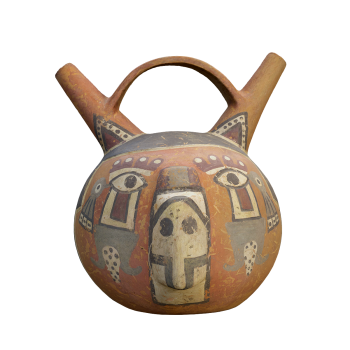
Ceramic containers in animal form - Bonn Collection in the Americas
Ceramic containers in animal form - Bonn Collection in the Americas

It is a type of pottery with animal characteristics, usually designed in the shape of animals or decorated with animal images. It is a work from the Bonn Collection in the Americas, which is a circular expansion casting container with angled spout connected in a stirrup shape. It was painted in colorful colors. The eye area, as well as the nose and ears in animal form, were depicted in detail and painted with additional eye and facial decorations. The origin is unknown, but it is collected in Teddy Hahn's collection. Not only does it have practical functions, but it also reflects the artistic aesthetics and cultural characteristics of ancient civilization.
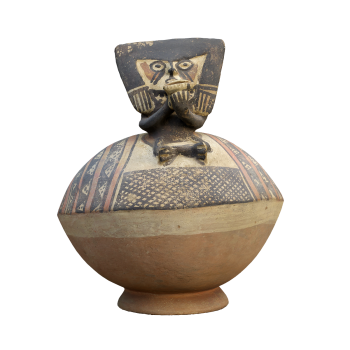
Colorful oval anthropomorphic pottery - Bonn Collection of the Americas

Colorful oval anthropomorphic pottery - Bonn Collection of the Americas

On a colorful oval pottery in the Bonn Collection in the Americas, there is a human figure sitting on it with legs crossed. This image is depicted on a black body with a white face, holding a musical instrument or corn in the hand. The main body is decorated with geometric patterns on both sides of the character, consisting of deep stripes and light reddish brown dotted triangles, which are alternately surrounded by red stripes and black lines. At the bottom of the character, an element is drawn as an oblique black line, forming a mesh like pattern. The origin of this pottery is unknown and belongs to Teddy Hahn's collection.